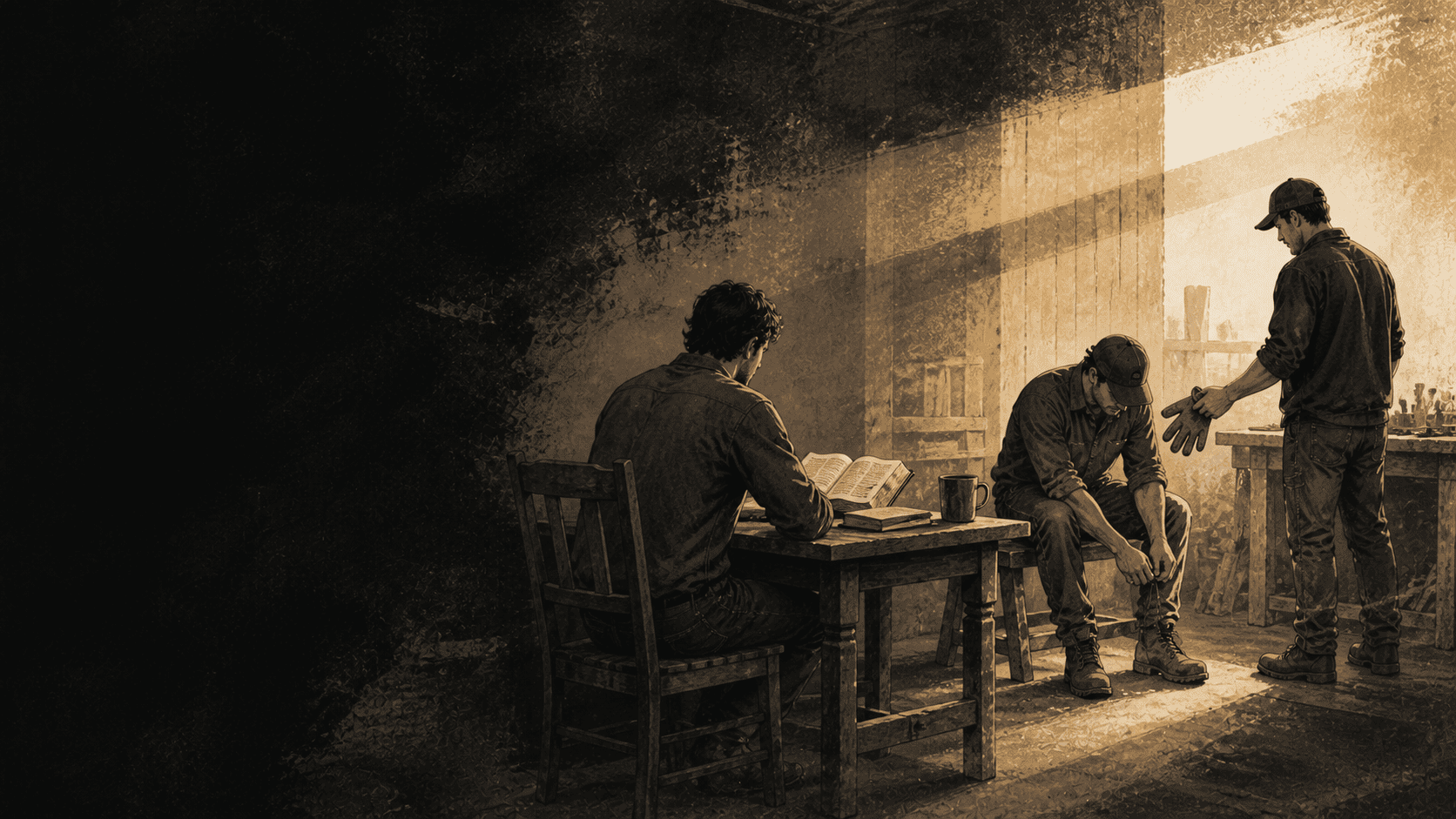
The program
Six months to freedom, purpose,
and work worth doing.
A residential recovery program for men in Bentonville, Arkansas — built on Scripture, real accountability, and a trade you can build a life on. At no cost to you.
What this is
A ministry,
not a facility
Limitless Life is a residential recovery program for men in Northwest Arkansas. You live here. You work here. You get up early, you stay accountable, and you do the honest work of getting free.
We’re not a hospital and we’re not a clinic. We’re a ministry — men who know what addiction costs, walking with men who are ready to be done with it.
The premise is simple, and it’s the reason the program is built the way it is: addiction isn’t just a habit to break. It’s a life that has to be rebuilt. A man can get sober in a week. Staying sober is about what he believes, who he answers to, how he works, and whether he has anything to walk toward.
So we work on the whole man. Not the addiction alone — the man underneath it.
A day here
What the routine
actually looks like
Early, structured, and busy. That’s the short version.
5:00am
Breakfast
5:30am
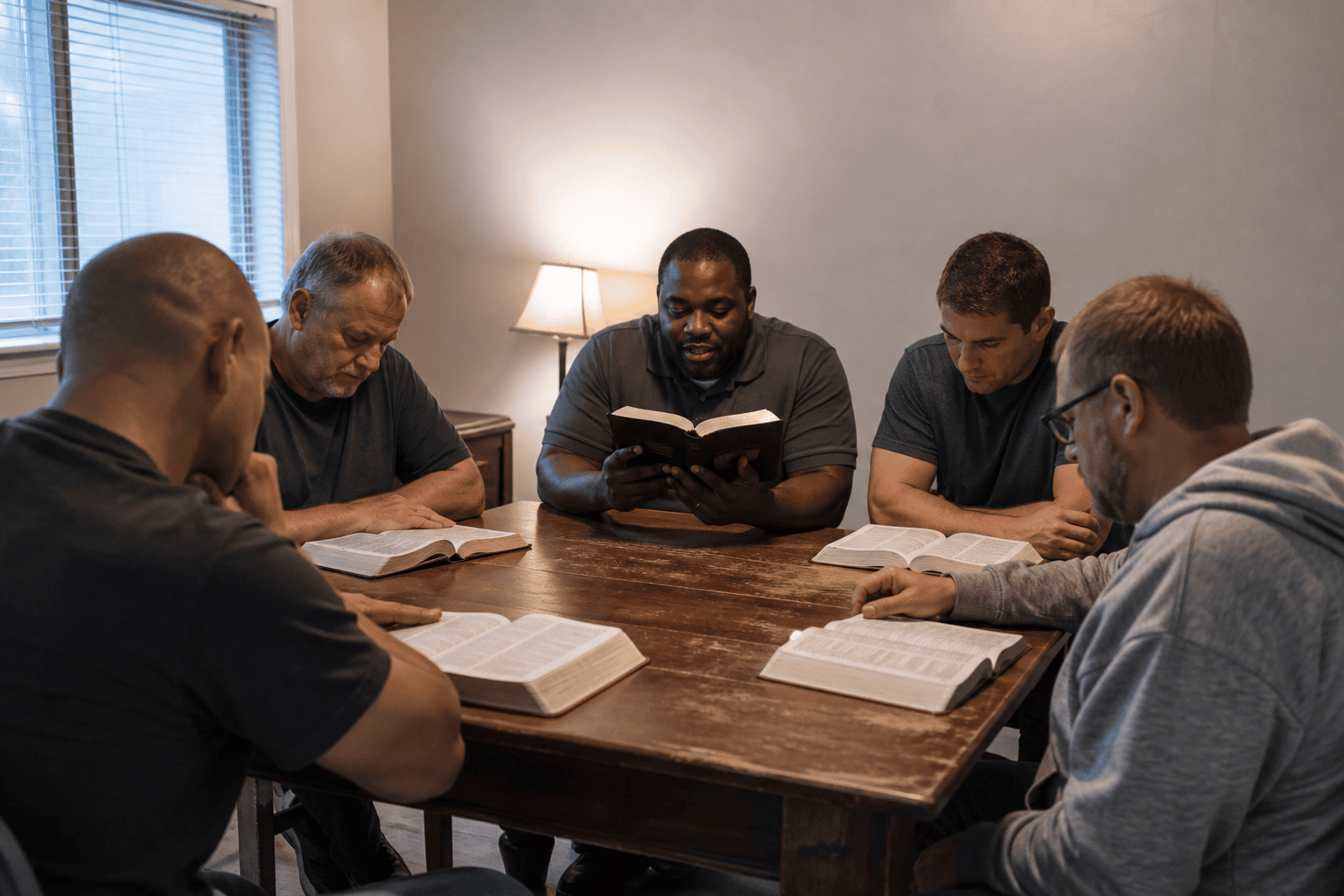
Bible study
Mon & Tue
Class
Biblical Foundations in the first three months; Business Leadership in the last three.
Wed–Sat
Work and job training
Saturdays are usually work around the camp, unless there’s an outreach or a special event.
It varies. Some weeks the ministry is out serving somewhere, and the schedule bends around it. But the shape of it doesn’t change: up early, in the Word, then to work.
Men who have not held a routine in years find this the hardest part of the first month. Most of them later say it’s the part that saved them.
The two phases
How the six months
are built
01
Months 1–3
Phase One — Biblical Foundations
The first three months are the base, and everything after them rests on it.
Men study Scripture daily and sit in Biblical Foundations class Mondays and Tuesdays. The work here is learning the gospel, coming to know Jesus personally, and starting to believe what God says about who they are. Shame is the fuel most addiction runs on. This phase is where that starts to come out.
It’s usually the hardest stretch. It’s also the one that determines whether the rest holds.
02
Months 3–6
Phase Two — Business Leadership
With the foundation in place, class shifts to leadership and work.
Resume writing. Interviewing. Leadership skills. How to carry responsibility and how to make decisions when nobody’s watching. Casey Turner has run his own businesses for over twenty years and teaches from that, not from a textbook.
This is the stretch where a man becomes someone an employer wants to hire and a family can count on.
Job training
Work is part of the program,
not a break from it
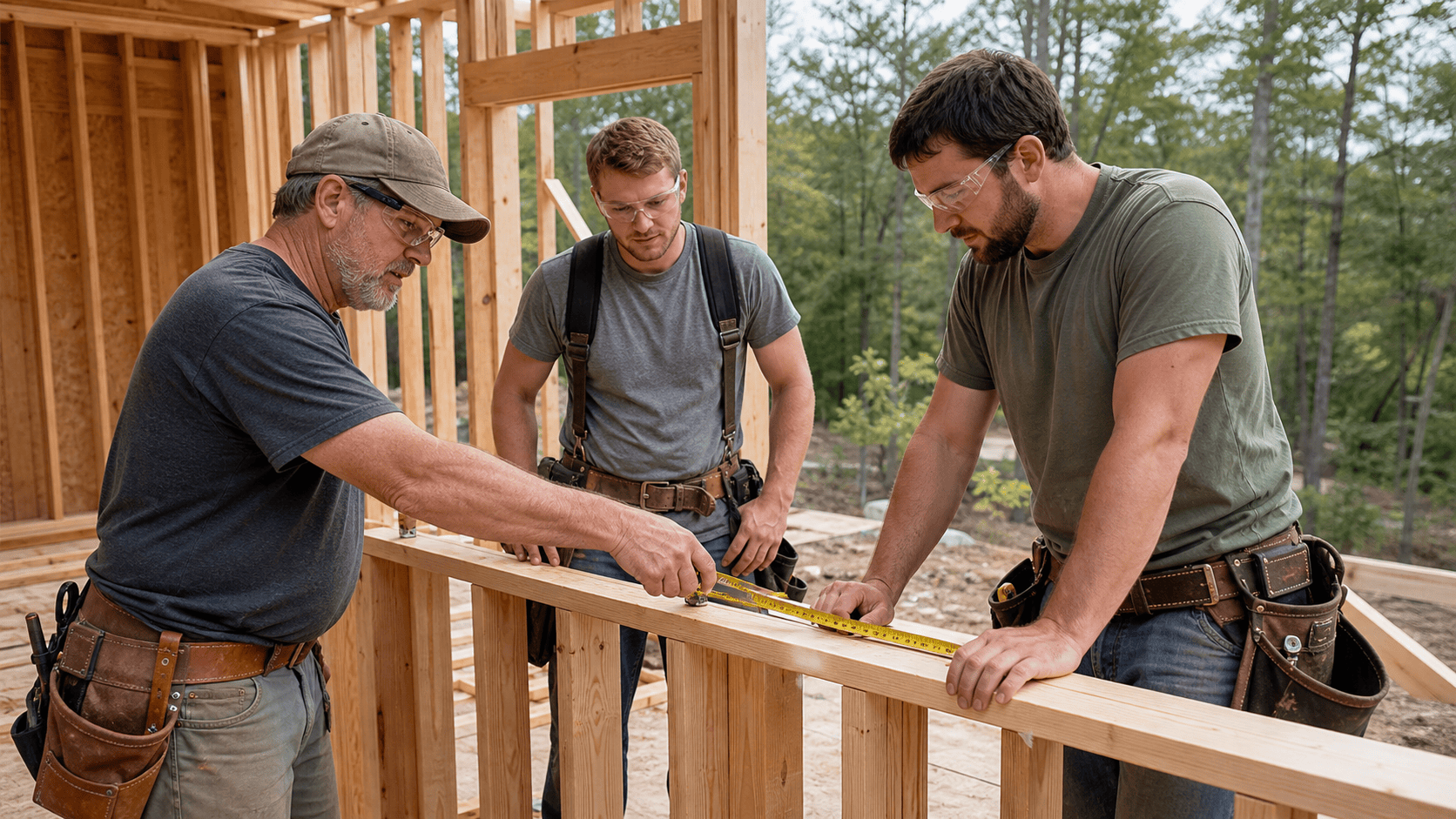
Wednesday through Saturday, men are working — throughout both phases, not just at the end.
Carpentry and trade skills. Job site cleanup. Landscaping. Work at the homes of supporters who back this ministry. Casey teaches much of it himself.
The point isn’t free labor. It’s that a man who has been unemployable for years needs to feel a hard day end well, needs a skill in his hands, and needs a work history he can point to. Idleness is dangerous in recovery. Meaningful work is part of the healing.
Months six and seven
Transition — the part
most programs skip
Getting sober is one thing. Walking back into an adult life with everything that has piled up while you were gone is another.
Tiffanie Turner runs this stretch, and it’s the practical wreckage:
- Working through outstanding court dates — a requirement, not an option. Many men have never handled their own; a family member did it, or nobody did.
- Restarting child support and fine payments
- Getting a GED or high school diploma if there isn’t one
- Getting a driver’s license back
- Job placement
- Reconnecting with family
Most men arrive having never been responsible for any of this. They leave having done it themselves.
Ready today? One call is the whole first step.
Why it’s built this way
Why six months
— because thirty days doesn’t hold
Most people picture rehab as a month. A month is what insurance tends to cover, so a month is what the industry built.
But the research on treatment length has been consistent for decades: programs shorter than about ninety days show limited lasting effect, and outcomes improve as length of stay increases. Not because people are slow learners — because the things that actually keep a man sober take time to become real.
Thirty days gets a man detoxed and hopeful. Then he goes back to the same phone, the same friends, the same street, and the same empty calendar — with thirty days of practice against fifteen years of habit.
Six months is long enough for something else to take root. Long enough to be discipled, not just informed.
Why residential — environment beats willpower
Most men who come to us have already tried to stop. Many have stopped, repeatedly. The problem was never that they didn’t want it badly enough.
The problem is that willpower loses to environment almost every time. Same apartment, same contacts in the phone, same 6pm with nothing to do — and eventually a bad night wins.
Living here changes the whole equation. Structure from the time you wake up. Men around you who know exactly what you’re doing when you start to drift. Nobody’s guarding the door — men are here because they choose to be, every day. But for six months, the environment is on your side instead of working against you.
Why men only — a brotherhood
Limitless Life is a men’s program. We don’t currently have a women’s facility, and we won’t pretend otherwise.
That’s partly practical and partly on purpose. Men tend to open up differently in a room with only men in it. The accountability is more direct. The distraction is lower. And the specific work of becoming a man other people can count on — as a son, a husband, a father, an employee — happens better in the company of men doing the same work.
How faith fits
Christ at the center,
not on the schedule
Plenty of programs bolt a chapel service onto a clinical model. That’s not what this is.
We believe addiction is, at its root, a spiritual problem — a man trying to fill something with a substance that was never going to fill it. Bible study starts at 5:30 every morning and the first three months of class are Scripture. That’s not decoration. It’s the foundation everything else is built on.
That said: you do not have to be a Christian to come here. You don’t need to have anything figured out. Plenty of men walk in unsure what they believe, or angry at God, or convinced they’re too far gone. Come as you are.
Just know what you’re walking into.
What it costs you
Nothing
out of pocket
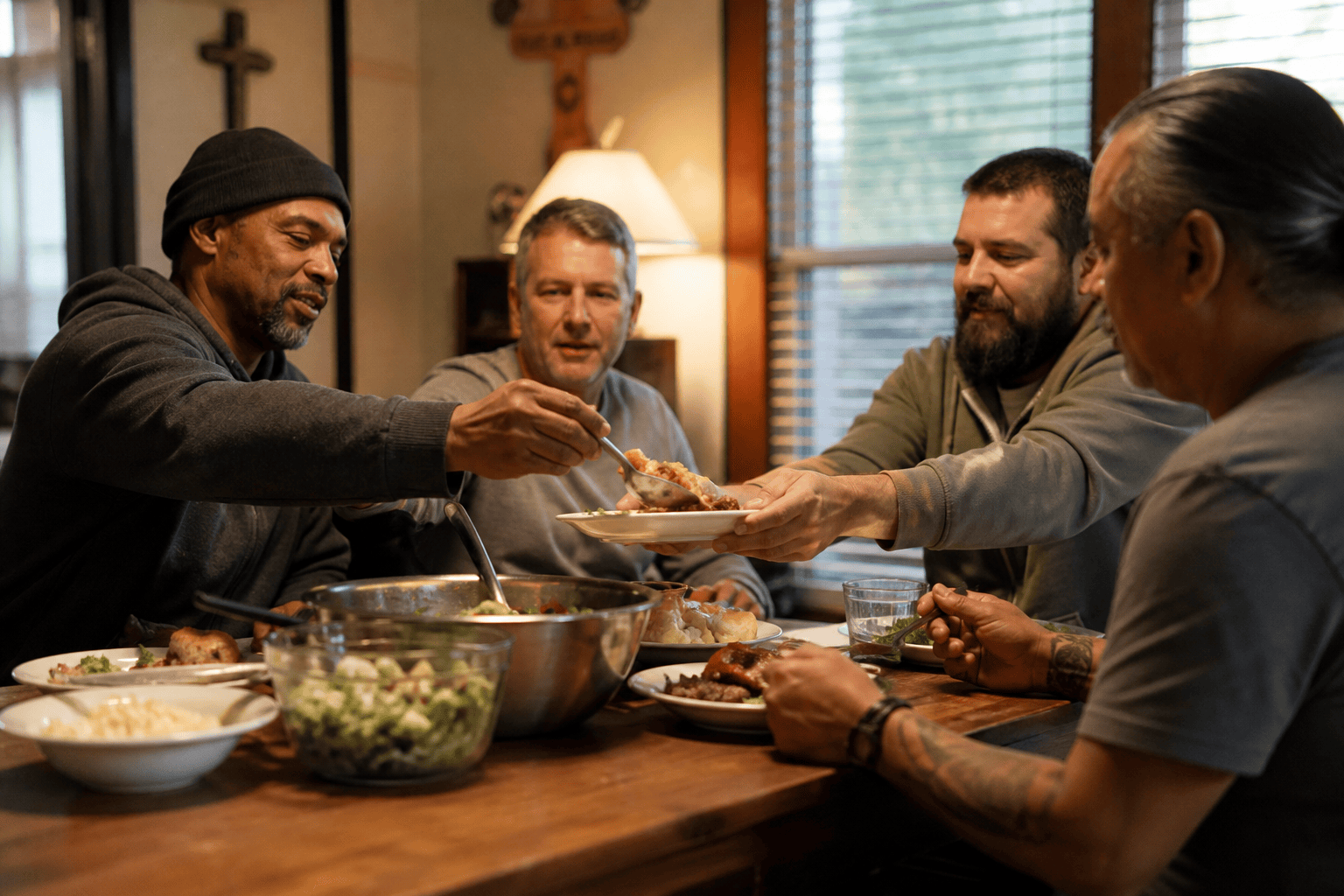
There’s no tuition, no program fee, and we don’t bill insurance. You won’t pay to be here and you won’t leave owing this ministry anything.
That doesn’t mean the program is free. It costs real money to run, and churches, businesses, and individuals across Northwest Arkansas carry that cost so a man who has burned through his savings, his family’s patience, and his last good option can still walk through the door.
The moment a man is finally ready is rarely the moment he has money. We didn’t want that to be the thing standing in the way.
Who this is for
Is this
for me?
Men 18 and older who want to be free from addiction and are willing to do the work.
You don’t need to be at rock bottom. You don’t need a job, a place to stay, money, insurance, or faith figured out in advance.
What you need is to be genuinely willing — to live here, to be told the truth about yourself, and to do things you don’t feel like doing on days you don’t feel like doing them.
Who we can’t take
- We do not accept registered sex offenders. The men in this program do outreach and work at churches and in the community, and we won’t put anyone in that position.
- Serious mental health diagnoses are handled case by case. Call and tell us the situation honestly. We’d rather have that conversation than turn someone away by policy.
- We’re not a medical facility. No detox, no licensed clinical treatment, no psychiatric care. If you need medical supervision to come off what you’re on, that has to happen first. Call us anyway. We’ll help you figure out where to start.
What to bring — pack light
- Toiletries
- Clothes
- Work boots
- Photo ID
Medications go through the office when you arrive. There’s nothing you’d be taking that automatically disqualifies you — Tiffanie works all of it out during the interview.
That’s the list. Don’t let not having something stop you from calling.
If you have a case open
Having court involvement doesn’t disqualify anyone. We work with probation and parole officers regularly.
More than that — we help men work through their court cases while they’re in the program. Outstanding dates, fines, child support. For a lot of men that’s the first time anyone has walked them through it instead of doing it for them or letting it pile up.
If you’re on probation out of state and your officer won’t approve you leaving, that’s between you and your officer. Call us and we’ll talk about it either way.
After graduation
We don’t
disappear
Graduates stay connected through ongoing support and groups. The ministry intends to add a weekly recovery service that graduates, current men, and families can all attend, and to open transitional housing so men have somewhere steady to land.
We’ll say plainly what isn’t built yet: the transitional houses don’t exist today, and we aren’t currently partnered with other sober living homes. Both are coming. What exists now is that nobody graduates and gets forgotten.
Common questions
Questions men
and families ask
How long is the program?
Six months residential, with a transition phase in months six and seven.
Who can apply?
Men 18 and older. This is a men’s program — we don’t currently have a women’s facility.
What does it cost me?
Nothing out of pocket. No tuition, no program fee, no insurance billing. Donors carry the cost.
Do you take insurance?
No, and you don’t need it.
Do I have to be a Christian?
No. But this is a Christ-centered ministry and faith is part of every day here. Come as you are — just come knowing that.
What time does the day start?
Breakfast at 5:00am, Bible study at 5:30am.
Will I be working?
Yes. Wednesday through Saturday, throughout the program.
Do you provide detox or medical treatment?
No. We’re not a licensed clinical facility. If you need medical care to come off what you’re on, call us anyway and we’ll help you find the right first step.
What if I’m on probation or have court involvement?
Call and tell us. We work with probation and parole officers, and we help men handle their court cases while they’re here.
Do you accept sex offenders?
No. Our men do outreach and work at churches, and we won’t put anyone in that position.
What if I have a mental health diagnosis?
Case by case. Call and tell us honestly what’s going on.
What if I’ve been through a program before and it didn’t work?
Most of the men here have. That’s not a mark against you.
What do I bring?
Toiletries, clothes, work boots, and ID. Medications go through the office.
How do I get in?
One phone call. 479-309-3444. You’ll talk with Tiffanie, and that conversation is the whole first step.
What happens after graduation?
Ongoing support and groups. Transitional housing and a weekly recovery service are planned.

For families
If you’re reading this
for someone else
You may be the one doing the research because he isn’t ready to. That’s normal, and it’s not wasted effort.
Six months sounds like a long time when you’re the one waiting. It’s worth understanding why it’s built that way — the odds of this being the last time go up substantially with length of stay.
You can call and ask questions without him knowing, without committing to anything, and without having to explain yourself.
Six months is not a long time
to get your life back.
If you’re ready — or ready to find out — start with a call.